

How Many Voters Are Registered In The Illinois Third Congressional District?
| Illinois's tertiary congressional district | |||
|---|---|---|---|
| From 2013 to 2023 From 2023 to 2033 District boundaries | |||
| Representative |
| ||
| Surface area | 125 sq mi (320 kmtwo) | ||
| Population (2021) | 753,677 | ||
| Median household income | $75,411[ane] | ||
| Ethnicity |
| ||
| Melt PVI | D+6[2] [three] | ||


Illinois'due south 3rd congressional district includes part of Cook Canton, and has been represented by Democrat Marie Newman since Jan three, 2021. The district was previously represented by Dan Lipinski from 2005 to 2021, and by Lipinski's male parent Pecker from 1983 to 2005.
The district includes due west and southwest suburbs of Chicago as far as the DuPage Canton border, too equally portions of the Southwest Side of the city of Chicago itself, and covers 124.5 square miles (322 km2), making it ane of the fifty smallest districts in the U.Southward., although at that place are five smaller districts in Illinois. Information technology is next to the 1st District to the east and due south, the quaternary District to the north, and the 11th Commune to the west, and besides borders the 6th and 7th Districts at its northwest and northeast corners respectively. The district was created following the 1830 Census and came into being in 1833, five months earlier Chicago was organized as a town; it initially included northern and western Illinois[4] before representing areas of e central and northwestern Illinois from 1843 to 1873.[5] [half-dozen] [seven] The district has included function of Chicago since 1873, and part of the city's southwest side since 1895; the district has been primarily suburban since 1973.
2011 redistricting [edit]
The district covers parts of Cook, Du Page and Will counties, as of the 2011 redistricting which followed the 2010 demography. All or parts of Chicago, Bridgeview, Burbank, Crest Hill, Hickory Hills, Homer Glen, Justice, La Grange, Lemont, Lockport, Oak Backyard, Palos Heights, Palos Hills, Romeoville, Summit, Western Springs and Worth are included.[8] The representatives for these districts were elected in the 2012 chief and general elections, and the boundaries became effective on January 3, 2013.
Geography [edit]
The District includes the municipalities of Bedford Park, Bridgeview, Burbank, Chicago Ridge, Countryside, Wood View, Hickory Hills, Hodgkins, Hometown, Indian Head Park, Justice, La Grange, La Grange Park, Lyons, McCook, Merrionette Park, Oak Backyard, Palos Hills, Riverside, Stickney and Meridian, nigh all of Berwyn, Brookfield, Western Springs and Willow Springs, and parts of Alsip, Burr Ridge, Cicero, Darien, Hillside, North Riverside, Orland Hills, Palos Heights, Palos Park, Westchester and Worth.
In the Metropolis of Chicago, it includes the communities of Bridgeport (home of mayor Richard M. Daley until he relocated in the late 1990s to the Near Due south Side'due south Central Station development), Clearing, Garfield Ridge, Mountain Greenwood and West Lawn; well-nigh all of Beverly; those portions of Archer Heights and West Elsdon w of Pulaski Road; the western portions of Ashburn, Chicago Lawn and Morgan Park; the portion of McKinley Park s of Archer Avenue; parts of Gage Park and New City; and a minor department (1/16 miii) of Armour Square.
Demographics [edit]
The District, situated betwixt the Hispanic-majority 4th District to the n and the black-bulk 1st and seventh Districts to the east, is the home of numerous sizable and celebrated ethnic groups including Irish, Polish, Arab, German, Italian and Czech immigrants and their descendants. At 14.2%, the Irish make up the largest white ethnic group in the district,[9] [x] most prominently in the Bridgeport expanse (the bequeathed neighborhood of the Daley family and other Chicago Irish politicians) and the Mount Greenwood-Beverly area; information technology is the largest Irish population in any district west of Philadelphia's suburbs.[11] The Polish form the adjacent largest white ethnic group at xiii.v%,[nine] tying the northwest side's 5th District for the second highest percentage of whatever district, behind only New York's 27th congressional district.[11] The adjacent largest white ethnic groups are Germans (eleven.0%) and Italians (6.9%).[9] Of the suburbs primarily s of 87th Street (in Palos and Worth Townships), 9 of ten have larger Irish gaelic than Smoothen populations, usually by large margins; merely north of 87th Street, in those areas in Lyons Township south of Interstate 55 or in the townships to the east of Harlem Avenue, ix of ten suburbs have greater Shine populations than Irish, over again by large margins. In Oak Lawn, the district'southward largest suburb, Irish outnumber Smoothen 30%-nineteen%; in neighboring Burbank, the district's 3rd largest suburb, Shine outnumber Irish by an identical margin.[ citation needed ]
More than recently a large Mexican community has moved to the district, notably in Berwyn, Cicero, Hodgkins and Summit where they stand for over thirty% of the population, and along Archer Artery, a major Chicago avenue that runs through the commune'southward northern department.[x] There is also a sizable Greek community in Oak Backyard and Palos Hills. In the last two decades, there has been notable Arab settlement in the vicinity of Bridgeview, and past the 2000 Census, Arabs represented one of the five largest non-Hispanic ethnic groups in Bridgeview and 3 adjacent suburbs. Approximately 41% of the district's residents live in Chicago. Roughly 21% of the commune's population are Hispanic, 68% are Caucasian, 6% are African American and 3% are Asian; redistricting post-obit the 2000 Census and the continued influx of Hispanics tripled the minority population from a decade before, equally the district in its previous configuration had a population that was 7% Hispanic, 2% African American and 1% Asian.[12] The more flush areas of the district are mostly located in its northwestern portion.
Economic system [edit]
The district is a historic U.S. transportation and shipping hub; non merely does information technology include Chicago Midway International Airport, just it is also traversed by the Chicago Sanitary and Ship Culvert, the Calumet Sag Channel, and the Des Plaines River, earning national designations for the Chicago Portage National Historic Site in Forest View and the Illinois and Michigan Culvert National Heritage Corridor. The path of historic Route 66 runs southwest through the district from its eastern terminate in Chicago. Interstate 55 intersects with both the Tri-Country Tollway (Interstate 294) and the Dan Ryan Freeway (Interstate ninety/94) in the district, and in 2001 – since which time the commune has shifted slightly to the northwest – information technology was noted as likely having more freight yards and railroad crossings than any other district.[10]
The district includes SeatGeek Stadium, home of the Chicago Carmine Stars team in Women'due south Professional Soccer, as well as Hawthorne Race Course; the surface area as well benefits from Chicago White Sox dwelling house games at U.S. Cellular Field, which is less than 1,000 anxiety (300 k) beyond the district's border. Portions of the Cook County Wood Preserves encompass several square miles in the district'due south southwest corner. Cultural attractions include Brookfield Zoo and the Balzekas Museum of Lithuanian Civilization in Due west Lawn; educational institutions include St. Xavier University in Mount Greenwood, Moraine Valley Community Higher in Palos Hills, Morton Higher in Cicero, and Richard J. Daley College, a Chicago metropolis college, in West Lawn; and medical facilities include Advocate Christ Medical Center in Oak Lawn, Adventist La Grange Memorial Hospital in La Grange and MacNeal Hospital in Berwyn. A Ronald McDonald House adjacent to Advocate Christ opened in Dec 2008.[13] [14] Industrial and business organization presences in the district include: Tootsie Roll Industries; Electro-Motive Diesel; a Nabisco bakery which is the largest beige baker in the world;[15] the Chicago Surface area Consolidation Hub of United Parcel Service and adjacent BNSF Railway m;[16] an ACH Food manufacturing found (formerly part of Corn Products Company) in Tiptop;[17] an Owens Corning roofing and asphalt plant in Peak; and a Nalco Chemic plant in Bedford Park. The old site of the International Amphitheatre, now an Aramark establish, is inside the district. Organizations based in the district include the American Nuclear Order in La Grange Park. Among the federal facilities in the district is the Great Lakes Regional Headquarters of the National Athenaeum and Records Administration[xviii] in Westward Backyard.
Other district sites on the National Register of Historic Places include:
- American Land Banking company, Berwyn
- Berwyn Wellness Center
- Berwyn Municipal Building
- Avery Coonley House, Riverside
- Cornell Square, New City, Chicago
- Arthur J. Dunham House, Berwyn
- Offset Congregational Church of Western Springs
- Grossdale Station, Brookfield
- Haymarket Martyrs' Monument National Historic Landmark, Woods Park
- Hofmann Tower, Lyons
- La Grange Village Historic District
- Lyons Township Hall, La Grange
- Old Stone Gate of Chicago Union Stockyards National Celebrated Landmark, New City, Chicago
- George E. Purple House, La Grange
- Ridge Historic Commune, Beverly/Morgan Park, Chicago
- Riverside Landscape Architecture District, Riverside
- Robert Silhan House, Berwyn
- F.F. Tomek House, Riverside
- Western Springs Water Tower
Politics [edit]
The District has been described as "ancestrally Democratic, culturally conservative, multiethnic and viscerally patriotic."[19] Information technology earned a reputation as existence home to Reagan Democrats when in the 1980 presidential election it was one of only two Chicago districts (out of ix) to be won past Republican Ronald Reagan, along with the 6th District (an almost entirely suburban commune which also included Chicago's O'Hare Airport); the district simultaneously reelected Autonomous congressman Marty Russo with virtually 69% of the vote.[20] The Reagan Democrat clarification became fifty-fifty more appropriate when Reagan received 65% of the vote hither in 1984 while Russo once more won with 64%.[21] Redistricting for the 1990s shifted the district into more reliably Democratic territory, but Bill Clinton won the commune in 1992 by just a 41%-39% margin despite receiving at least 65% of the vote in four other s side districts; he won the commune with 53% in 1996 although his totals in the other south side districts were all between 80 and 85%. George Due west. Bush-league received 41% of the vote hither in both 2000 and 2004 despite not exceeding 21% in any of the other four south side districts; it was his all-time performance in any district located primarily within Cook County. Much of the district'southward current suburban territory was in the 4th District from the 1950s to the 1970s, when that was a solidly Republican suburban district represented past Ed Derwinski. More recently, Lyons, Palos and Riverside Townships in the western half of the 3rd Commune have all voted for Bush-league in 2000.[22] Over the concluding 8 presidential elections, the Democratic nominee for Congress has run an average of twenty points ahead of the political party's nominee for president in the commune.[23]
Redistricting which took effect for the 1992 elections kept only forty% of the district's previous expanse, and pitted nine-term incumbent Russo – who inverse his residence rather than run in the 2nd District, which now included his previous home – against five-term incumbent Bill Lipinski, who had previously represented the neighboring 5th Commune, in the Democratic primary. Lipinski ran close to Russo in the suburbs but easily won the Chicago areas, and won the primary 58%-37%.[24] Lipinski was incomparably the nearly bourgeois Democrat in the Illinois delegation,[nineteen] opposing ballgame and homosexual people serving in the military while supporting schoolhouse prayer, tuition vouchers, the Defence of Spousal relationship Deed and the death penalty. He also helped to write a proposed constitutional amendment in 1997 prohibiting flag desecration.[25] [26] A member of the Blue Dog Democrats,[26] he was 1 of just thirty Democrats to vote for the Republican welfare reform plan.[10] He clashed often with the Clinton assistants, opposing the president's position over one-half the fourth dimension in the 1997-1998 Congress.[27] He was 1 of 31 Democrats to vote in favor of a Judiciary Committee inquiry during the leadup to Clinton's impeachment; he eventually voted against impeachment, only simultaneously called on Clinton to resign.[28] In 1999, Lipinski stated that Clinton "doesn't take brownie on military issues," adding that "the American people feel Clinton is unsure."[26] He was a consequent opponent of U.S. gratuitous trade agreements, arguing that they were disastrous for American manufacturing.[ten] [26] Lipinski received higher blessing ratings from the American Bourgeois Matrimony than from the ACLU in 12 of his last 13 years in part, though his highest ratings generally came from labor and consumer groups[25] [27] and the Christian Coalition.[29] He received a 0 rating from the ACLU for the 1997–98 term,[27] and too compiled an overall 0 rating from the National Ballgame Rights Action League.[29] His policies enabled him to work easily with Republicans; he was a candidate to become Transportation Secretary in the Bush administration, and collaborated with House Speaker Dennis Hastert of the 14th District to pattern the state'south redistricting plan following the 2000 Census.[28] and afterward surviving with a 54%-46% win amidst the Republican gains of 1994 he was reelected by increasing margins in each succeeding election; in 2002 he became the offset unopposed candidate in the history of the Commune.[30]
In the 2018 Republican primary, the only option was Arthur Jones, a self-proclaimed member of the Nazi political party and holocaust denier. Although Jones received over twenty,000 votes in the primary, many district GOP organizations took the unprecedented stride of endorsing Rep. Dan Lipinski in the general ballot.[ citation needed ]
Contempo electoral history [edit]
Congress [edit]
2004 election [edit]
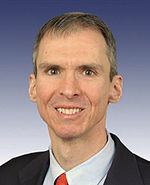
The district'southward seat changed easily under somewhat controversial circumstances in 2004. Lipinski was renominated in the main election, simply in August announced his intention to withdraw from the race, merely two weeks before the deadline for replacing a candidate on the ballot. Iv days subsequently, the commune's ward and township committeemen – including Lipinski himself equally well equally Mayor Daley's brother John and Illinois House Speaker Michael Madigan – met to choose a replacement; Lipinski nominated his son Dan, an assistant professor at the University of Tennessee, and he was approved without opposition despite not having lived in Illinois since 1989. In his initial entrada, the younger Lipinski stated that his policies made him "not really that different from" his father, and indicated that he would oppose aforementioned-sex marriage equally well as ballgame except when the mother's life was at stake. True to the district's heritage, he identified Reagan as his political hero.[31]
2012 election [edit]
2018 election [edit]
2020 election [edit]
Marie Newman won the 2020 Democratic primary against incumbent Dan Lipinski by 48.two% to 45.viii%.[35]
Presidential elections [edit]
How the district has voted in U.S. presidential elections.
Election results reflect voting in the commune equally it was configured at the fourth dimension of the election, not as it is configured today.
| Election | District | Illinois winner | National winner | ||||||||||||||||||||||||||||||||||||||||||||||||||||||||||||||||||||||||||||||||||||||||||||
|---|---|---|---|---|---|---|---|---|---|---|---|---|---|---|---|---|---|---|---|---|---|---|---|---|---|---|---|---|---|---|---|---|---|---|---|---|---|---|---|---|---|---|---|---|---|---|---|---|---|---|---|---|---|---|---|---|---|---|---|---|---|---|---|---|---|---|---|---|---|---|---|---|---|---|---|---|---|---|---|---|---|---|---|---|---|---|---|---|---|---|---|---|---|---|---|
| Winner | Runner-up | Other candidates | |||||||||||||||||||||||||||||||||||||||||||||||||||||||||||||||||||||||||||||||||||||||||||||
| 1852[37] | Pierce (D) viii,446 (46%) | Scott (Westward) 7,889 (43%) | Hale (FS) 2,028 (11%) | Pierce (D) | Pierce (D) | ||||||||||||||||||||||||||||||||||||||||||||||||||||||||||||||||||||||||||||||||||||||||||
| 1856[37] | Frémont (R) 19,313 (58%) | Buchanan (D) eleven,788 (36%) | Fillmore (KN) 1,921 (6%) | Buchanan (D) | Buchanan (D) | ||||||||||||||||||||||||||||||||||||||||||||||||||||||||||||||||||||||||||||||||||||||||||
| 1860[37] | Lincoln (R) thirty,121 (60%) | Douglas (D) nineteen,241 (38%) | Breckinridge (D) 395 (i%) Bong (CU) 236 (0.five%) | Lincoln (R) | Lincoln (R) | ||||||||||||||||||||||||||||||||||||||||||||||||||||||||||||||||||||||||||||||||||||||||||
| 1864[37] | Lincoln (R) 15,724 (68%) | McClellan (D) seven,441 (32%) | Lincoln (R) | Lincoln (R) | |||||||||||||||||||||||||||||||||||||||||||||||||||||||||||||||||||||||||||||||||||||||||||
| 1868[37] | Grant (R) | Seymour (D) | Grant (R) | Grant (R) | |||||||||||||||||||||||||||||||||||||||||||||||||||||||||||||||||||||||||||||||||||||||||||
| [ data unknown/missing ] | |||||||||||||||||||||||||||||||||||||||||||||||||||||||||||||||||||||||||||||||||||||||||||||||
| 1952[38] | Eisenhower (R) 105,513 (55%) | Stevenson (D) 86,220 (45%) | Eisenhower (R) | Eisenhower (R) | |||||||||||||||||||||||||||||||||||||||||||||||||||||||||||||||||||||||||||||||||||||||||||
| 1956[38] | Eisenhower (R) 114,807 (61%) | Stevenson (D) 72,862 (39%) | Eisenhower (R) | Eisenhower (R) | |||||||||||||||||||||||||||||||||||||||||||||||||||||||||||||||||||||||||||||||||||||||||||
| 1968[39] | Humphrey (D) 111,357 (56%) | Nixon (R) 69,344 (35%) | Wallace (AIP) xvi,665 (eight%) | Nixon (R) | Nixon (R) | ||||||||||||||||||||||||||||||||||||||||||||||||||||||||||||||||||||||||||||||||||||||||||
| 1972[40] | Nixon (R) 155,092 (seventy%) | McGovern (D) 65,226 (xxx%) | Nixon (R) | Nixon (R) | |||||||||||||||||||||||||||||||||||||||||||||||||||||||||||||||||||||||||||||||||||||||||||
| 1976[41] | Ford (R) 121,448 (58%) | Carter (D) 88,240 (42%) | Ford (R) | Carter (D) | |||||||||||||||||||||||||||||||||||||||||||||||||||||||||||||||||||||||||||||||||||||||||||
| 1980[42] | Reagan (R) 109,179 (52%) | Carter (D) 87,091 (41%) | Anderson (I) 12,594 (6%) | Reagan (R) | Reagan (R) | ||||||||||||||||||||||||||||||||||||||||||||||||||||||||||||||||||||||||||||||||||||||||||
| 1984[43] | Reagan (R) 158,281 (65%) | Mondale (D) 84,752 (35%) | Reagan (R) | Reagan (R) | |||||||||||||||||||||||||||||||||||||||||||||||||||||||||||||||||||||||||||||||||||||||||||
| 1988[44] | G.H.W. Bush (R) 130,606 (58%) | Dukakis (D) 92,108 (41%) | G.H.W. Bush (R) | G.H.W. Bush-league (R) | |||||||||||||||||||||||||||||||||||||||||||||||||||||||||||||||||||||||||||||||||||||||||||
| 1992[45] | B. Clinton (D) 108,342 (41%) | Yard.H.W. Bush (R) 102,632 (39%) | Perot (Indep.) 52,905 (xx%) | B. Clinton (D) | B. Clinton (D) | ||||||||||||||||||||||||||||||||||||||||||||||||||||||||||||||||||||||||||||||||||||||||||
| 1996[12] | B. Clinton (D) 114,089 (53%) | Dole (R) 78,853 (37%) | Perot (Reform) 19,441 (ix%) | B. Clinton (D) | B. Clinton (D) | ||||||||||||||||||||||||||||||||||||||||||||||||||||||||||||||||||||||||||||||||||||||||||
| 2000[28] | Gore (D) 118,342 (55%) | G.W. Bush (R) 88,458 (41%) | Nader (Thou) v,537 (3%) | Gore (D) | 1000.Due west. Bush-league (R) | ||||||||||||||||||||||||||||||||||||||||||||||||||||||||||||||||||||||||||||||||||||||||||
| 2004[46] | Kerry (D) 144,657 (59%) | M.Westward. Bush (R) 100,257 (41%) | Kerry (D) | Yard.W. Bush (R) | |||||||||||||||||||||||||||||||||||||||||||||||||||||||||||||||||||||||||||||||||||||||||||
| 2008[ citation needed ] | Obama (D) 154,999 (64%) | McCain (R) 85,502 (35%) | Obama (D) | Obama (D) | |||||||||||||||||||||||||||||||||||||||||||||||||||||||||||||||||||||||||||||||||||||||||||
| 2012[47] | Obama (D) 143,694 (56%) | Romney (R) 109,339 (43%) | Obama (D) | Obama (D) | |||||||||||||||||||||||||||||||||||||||||||||||||||||||||||||||||||||||||||||||||||||||||||
| 2016[47] | H. Clinton (D) 157,383 (55%) | Trump (R) 113,779 (40%) | H. Clinton (D) | Trump (R) | |||||||||||||||||||||||||||||||||||||||||||||||||||||||||||||||||||||||||||||||||||||||||||
| 2020[47] | Biden (D) 175,983 (56%) | Trump (R) 135,826 (43%) | Biden (D) | Biden (D) | |||||||||||||||||||||||||||||||||||||||||||||||||||||||||||||||||||||||||||||||||||||||||||
Prominent representatives [edit]
| Representative | Notes |
|---|---|
 John T. Stuart | Served as a major in the U.South. Army during the Black Hawk War (1832) Constitutional Wedlock nominee for the 1860 Illinois gubernatorial election Known influencer of Abraham Lincoln |
 Joseph Duncan | Elected the 6th Governor of Illinois (1834 – 1838) Whig nominee for the 1842 Illinois gubernatorial election |
 Lorenzo Brentano | Served as President of the Free Country of Baden (1849) |
 George R. Davis | Served as a major for the Union Army during the American Civil War (1862 – 1865) |
 Elihu B. Washburne | Served as Dean of the U.S. Firm of Representatives (1863 – 1869) Appointed the 25th U.South. Secretary of State (1869) Appointed the U.Southward. Minister to France (1869 – 1877) |
 Horatio C. Burchard | Appointed the 15th Managing director of the The states Mint (1879 – 1885) |
 Charles B. Farwell | Elected U.Southward. Senator from Illinois (1887 – 1891) |
 William Eastward. Stonemason | Elected U.South. Senator from Illinois (1897 – 1903) |
 Robert P. Hanrahan | Served as Deputy Assistant Secretarial assistant for Didactics in the U.Southward. Section of Wellness, Education, and Welfare (1975 – 1977) |
List of members representing the district [edit]
| Member | Political party | Years | Cong ress | Electoral history | Commune location |
|---|---|---|---|---|---|
| District created March four, 1833 | |||||
 Joseph Duncan | Jacksonian | March four, 1833 – September 21, 1834 | 23rd | Redistricted from the at-large district and re-elected in 1832. Re-elected in 1834. Resigned to become Governor of Illinois | 1833–1843 Bulk of northern and western Illinois: Adams, Calhoun, Cook, Fulton, Greene, Hancock, Henry, Jo Daviess, Knox, LaSalle, Macon, McDonough, McLean, Mercer, Morgan, Peoria, Superhighway, Putnam, Sangamon, Schuyler, Tazewell and Warren counties (numerous boosted counties were afterwards created within this surface area).[4] During this period, Abraham Lincoln was a district resident, first his political career as a country legislator; the district's representative from 1839 to 1843 was Lincoln's constabulary partner, John T. Stuart. |
| Vacant | September 21, 1834 – December ane, 1834 | ||||
| William Fifty. May | Jacksonian | December i, 1834 – March 3, 1837 | 23rd 24th 25th | Elected to terminate Duncan's term. Re-elected in 1836. Retired. | |
| Democratic | March 4, 1837 – March 3, 1839 | ||||
 John T. Stuart | Whig | March four, 1839 – March iii, 1843 | 26th 27th | Elected in 1838. Re-elected in 1840. Retired. | |
 Orlando B. Ficklin | Democratic | March four, 1843 – March 3, 1849 | 28th 29th 30th | Elected in 1842. Re-elected in 1844. Re-elected in 1846. [ data unknown/missing ] | 1843–1853 Shifted to the east central role of the state, taking in Christian, Clark, Clay, Coles, Crawford, Cumberland, DeWitt, Edgar, Effingham, Fayette, Jasper, Lawrence, Macon, Moultrie, Piatt, Richland and Shelby counties.[5] |
| Timothy R. Young | Autonomous | March four, 1849 – March three, 1851 | 31st | Elected in 1848. [ data unknown/missing ] | |
| Orlando B. Ficklin | Democratic | March 4, 1851 – March three, 1853 | 32nd | Elected in 1850. [ data unknown/missing ] | |
 Jesse O. Norton | Whig | March 4, 1853 – March iii, 1855 | 33rd 34th | Elected in 1852. Re-elected in 1854. Retired. | 1853–1863 Shifted n to embrace the twelve counties to the south and southwest of Melt County: Bureau, Champaign, DeWitt, Grundy, Iroquois, Kendall, LaSalle, Livingston, McLean, Putnam, Vermilion and Will counties.[vi] |
| Opposition | March 4, 1855 – March 3, 1857 | ||||
 Owen Lovejoy | Republican | March 4, 1857 – March three, 1863 | 35th 36th 37th | Elected in 1856. Re-elected in 1858. Re-elected in 1860. Redistricted to the 5th commune. | |
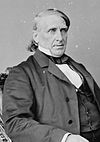 Elihu B. Washburne | Republican | March 4, 1863 – March half dozen, 1869 | 38th 39th 40th 41st | Redistricted from the 1st district and re-elected in 1862. Re-elected in 1864. Re-elected in 1866. Re-elected in 1868. Resigned to become U.Southward. Secretary of State. | 1863–1873 Relocated to include the 6 counties in the northwestern corner of the state: Carroll, Jo Daviess, Lee, Ogle, Stephenson and Whiteside counties.[vii] |
| Vacant | March 6, 1869 – Dec half-dozen, 1869 | 41st | |||
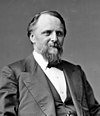 Horatio C. Burchard | Republican | December 6, 1869 – March 3, 1873 | 41st 42nd | Elected to finish Washburne'southward term. Re-elected in 1870. Redistricted to the 5th district. | |
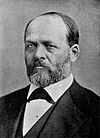 Charles B. Farwell | Republican | March 4, 1873 – May 6, 1876 | 43rd 44th | Redistricted from the 1st district and re-elected in 1872. Lost election competition. | 1873–1883 Relocated to include Lake County, the sixteen townships comprising the northern half of Cook Canton (Barrington, Cicero, Elk Grove, Evanston, Hanover, Jefferson, Lake View, Leyden, Maine, New Trier, Niles, Northfield, Palatine, Proviso, Schaumburg, Wheeling), and the northward side of Chicago (the metropolis's northern boundary east of the river was then Fullerton Artery).[48] During this menses, the Near North Side was recovering from the devastation of the Keen Chicago Fire of October 1871. |
 John V. Le Moyne | Autonomous | May vi, 1876 – March 3, 1877 | 44th | Won election contest. Lost re-election. | |
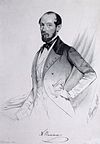 Lorenzo Brentano | Republican | March 4, 1877 – March 3, 1879 | 45th | Elected in 1876. Lost renomination. | |
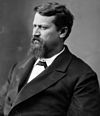 Hiram Hairdresser Jr. | Republican | March 4, 1879 – March 3, 1881 | 46th | Elected in 1878. Lost renomination. | |
| Charles B. Farwell | Republican | March iv, 1881 – March 3, 1883 | 47th | Elected in 1880. Retired. | |
 George R. Davis | Republican | March 4, 1883 – March 3, 1885 | 48th | Redistricted from the 2nd district and re-elected in 1882. Retired. | 1883–1893 Parts of the west side between twelfth Street (at present Roosevelt Road) and the Due north Branch of the Chicago River, excluding a small area north of 12th Street near the river; every bit the city was still expanding westward, the western boundary was Western Avenue from the river to North Avenue, and Crawford Avenue (now Pulaski Road) from Northward to 12th.[49] Illinois gained 2 additional representatives following the 1890 Census, but they were elected on an at-large footing for the 1893–1895 term before redistricting occurred, and the previous decade's districting remained in effect.[l] |
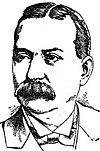 James H. Ward | Autonomous | March four, 1885 – March 3, 1887 | 49th | Elected in 1884. Retired. | |
 William E. Mason | Republican | March 4, 1887 – March 3, 1891 | 50th 51st | Elected in 1886. Re-elected in 1888. Lost re-election. | |
 Allan C. Durborow Jr. | Democratic | March four, 1891 – March three, 1895 | 52nd 53rd | Elected in 1890. Re-elected in 1892. Retired. | |
| 1893–1903 From the river south to 26th Street; West of the river and s of 12th Street bordered on the west past Johnson Street (now Peoria Street) from twelfth to 22nd Street (now Cermak Road) and by Halsted Street from 22nd to the river; and South of the Illinois and Michigan Canal and the river as far southward as 39th Street (at present Pershing Route) between Western and Wentworth Avenues.[51] In the 1896 Firm election, Clarence Darrow lost by 590 votes (2.5%).[52] | |||||
 Lawrence E. McGann | Democratic | March 4, 1895 – December 27, 1895 | 54th | Elected in 1894. Lost election contest. | |
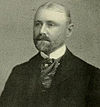 Hugh R. Belknap | Republican | December 27, 1895 – March 3, 1899 | 54th 55th | Won election contest. Elected in 1896. Lost re-ballot. | |
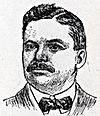 George P. Foster | Autonomous | March 4, 1899 – March 3, 1903 | 56th 57th | Elected in 1898. Re-elected in 1900. Redistricted to the 4th district. | |
 William Due west. Wilson | Republican | March 4, 1903 – March 3, 1913 | 58th 59th 60th 61st 62nd | Elected in 1902. Re-elected in 1904. Re-elected in 1906. Re-elected in 1908. Re-elected in 1910. Lost re-ballot. | 1903–1933 Began to take on its modern territory, and included the nine southernmost townships of Cook County (Blossom, Bremen, Calumet, Lemont, Orland, Palos, Rich, Thornton and Worth), as well equally that part of Chicago west of State Street between 51st Street and 111th Street excepting one and a quarter square miles in the southeast corner. (Note: In 1903 the city's western limit at 111th Street was Western Avenue, and at 115th Street was Ashland Artery; simply during this period, various portions of Calumet and Worth townships were annexed past Chicago.)[53] Illinois' districts were not redrawn until 1947, taking result for the 1948 elections.[54] |
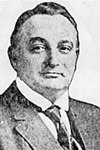 George E. Gorman | Democratic | March 4, 1913 – March iii, 1915 | 63rd | Elected in 1912. Retired. | |
| William W. Wilson | Republican | March 4, 1915 – March three, 1921 | 64th 65th 66th | Elected in 1914. Re-elected in 1916. Re-elected in 1918. Retired. | |
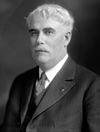 Elliott Westward. Sproul | Republican | March 4, 1921 – March iii, 1931 | 67th 68th 69th 70th 71st | Elected in 1920. Re-elected in 1922. Re-elected in 1924. Re-elected in 1926. Re-elected in 1928. Lost re-election. | |
 Edward A. Kelly | Democratic | March 4, 1931 – January 3, 1943 | 72nd 73rd 74th 75th 76th 77th | Elected in 1930. Re-elected in 1932. Re-elected in 1934. Re-elected in 1936. Re-elected in 1938. Re-elected in 1940. Lost re-ballot. | |
| 1933–1943 [ data unknown/missing ] | |||||
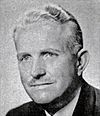 Fred Eastward. Busbey | Republican | January 3, 1943 – Jan 3, 1945 | 78th | Elected in 1942. Lost re-election. | 1943–1953 Included that role of Chicago bounded on the north past 65th Street (Cicero Avenue to Western Avenue), Marquette Road (Western to Damen), 59th Street (Damen to Wallace) and Garfield Boulevard (Wallace to the railroad between Wentworth and Land Street), and divisional on the east past the railroad (Garfield to 59th), State Street (59th to 73rd Street), Indiana Artery (73rd to 83rd Street), South Park Boulevard (later renamed Male monarch Drive, 83rd to 99th Street), Stewart Artery (99th to 103rd Street) and Halsted (103rd to 123rd Street).[55] The aforementioned boundaries were maintained in the redistricting after 1950.[56] |
| Edward A. Kelly | Democratic | Jan 3, 1945 – January 3, 1947 | 79th | Elected in 1944. Lost re-election. | |
| Fred Due east. Busbey | Republican | January 3, 1947 – January iii, 1949 | 80th | Elected in 1946. Lost re-election. | |
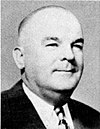 Neil J. Linehan | Autonomous | January iii, 1949 – Jan iii, 1951 | 81st | Elected in 1948. Lost re-election. | |
| Fred East. Busbey | Republican | January 3, 1951 – January iii, 1955 | 82nd 83rd | Elected in 1950. Re-elected in 1952. Lost re-election. | |
| 1953–1963 [ data unknown/missing ] | |||||
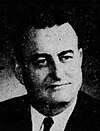 James C. Murray | Democratic | January iii, 1955 – Jan 3, 1957 | 84th | Elected in 1954. Lost re-ballot. | |
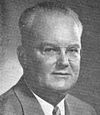 Emmet F. Byrne | Republican | January three, 1957 – January 3, 1959 | 85th | Elected in 1956. Lost re-election. | |
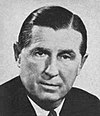 William T. Murphy | Autonomous | January 3, 1959 – January three, 1971 | 86th 87th 88th 89th 90th 91st | Elected in 1958. Re-elected in 1960. Re-elected in 1962. Re-elected in 1964. Re-elected in 1966. Re-elected in 1968. Retired. | |
| 1963–1973 Included the village of Evergreen Park as well as that part of Chicago bounded on the north by 66th Street (Cicero to the railroad 1/2 mile east of Kedzie), Marquette (the railroad to Damen), 59th Street (Damen to Racine) and Garfield (Racine to the railroad i/4 mile east of Halsted), and bounded on the east past the railroad (Garfield to 59th), Halsted (59th to 63rd Street), Land Street (63rd to 83rd Street), Stewart (83rd to 99th Street), State Street (99th to 111th Street), Wentworth Avenue (111th to 113th Street) and Halsted (113th to 123rd Street).[57] There was additional redistricting in Illinois which took event for the 1967–1969 term, but the 3rd District was non altered.[58] | |||||
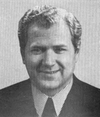 Morgan F. Murphy | Democratic | Jan three, 1971 – January 3, 1973 | 92nd | Elected in 1970. Redistricted to the 2nd district. | |
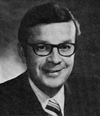 Robert P. Hanrahan | Republican | January 3, 1973 – January 3, 1975 | 93rd | Elected in 1972. Lost re-election. | 1973–1983 Shifted primarily into suburban areas to include Thornton and Calumet Townships, most of Worth Township (excepting the municipalities of Bridgeview, Chicago Ridge, Crestwood, Palos Heights and Worth), the Chicago communities of Ashburn and Mount Greenwood, those parts of West Backyard and Chicago Backyard south of 63rd Street, and those parts of Beverly and Morgan Park west of Western Avenue.[59] |
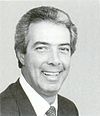 Marty Russo | Democratic | January 3, 1975 – January 3, 1993 | 94th 95th 96th 97th 98th 99th 100th 101st 102nd | Elected in 1974. Re-elected in 1976. Re-elected in 1978. Re-elected in 1980. Re-elected in 1982. Re-elected in 1984. Re-elected in 1986. Re-elected in 1988. Re-elected in 1990. Lost renomination. | |
| 1983–1993 Parts of the district shifted to the west, taking in role of the 4th district. The commune at present included: Bremen Township; Worth Township excepting that part between 111th Street and 135th Street westward of Cicero Avenue too as approximately 1/4 mi2 of Worth north of 111th; that role of Calumet Township in Blue Island and Calumet Park northwest of the railroad running from 123rd and Laflin to the western township line; that office of Thornton Township west of the Calumet Expressway having equally its northern boundary 167th Street (from the Bremen Township line to the eastern edge of Hazel Crest), 171st/172nd Street (Hazel Crest to Halsted Street), 167th (Halsted to Land Street, which becomes Indiana Avenue) and the Little Calumet River (Indiana Avenue to the Calumet Thruway); the part of Stickney Township southward of 65th Street; the Chicago communities of Clearing, West Lawn, Ashburn, Mount Greenwood and Beverly, the western part of Morgan Park, and the boosted role of Chicago between 55th Street, 75th Street, Cicero Artery and the railroad ane/4 mile due east of Western excepting that portion from the railroad to Western between 63rd Street and 69th Street.[60] | |||||
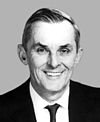 Bill Lipinski | Democratic | Jan iii, 1993 – January 3, 2005 | 103rd 104th 105th 106th 107th 108th | Redistricted from the 5th commune and re-elected in 1992. Re-elected in 1994. Re-elected in 1996. Re-elected in 1998. Re-elected in 2000. Re-elected in 2002. Retired. | 1993–2003 Shifted significantly to the northwest, and now included: all of Lyons Township; all of Stickney Township except the portion north of Pershing Road; all of Berwyn and Riverside; approximately the eastern half of Brookfield and the western half of Cicero; those portions of Forest Park and Northward Riverside east of the Des Plaines River and south of Harrison Street; near of Oak Park south of the Eisenhower Expressway; those parts of Worth Township having as their eastern boundary Pulaski Road from 87th Street to 101st Street, and Cicero Avenue from 101st Street to 135th Street, with pocket-sized variations in Oak Backyard; those parts of Palos Township having every bit their western purlieus Roberts Road (80th Artery) from 87th Street to 120th Street and so southwest along the railroad to 135th Street, plus approximately one/8 mtwo west of Roberts Road in the vicinity of Stagg High School; those parts of Bremen Township having as their eastern purlieus Cicero Artery from 135th Street to 143rd Street, the railroad and and then Pulaski from 143rd Street to 159th Street, Cicero from 159th Street to 167th Street, Interstate 57 from 167th Street to 177th Street, and Central Avenue from 177th Street to 183rd Street; the Chicago communities of Garfield Ridge, Clearing, Archer Heights, West Elsdon and W Lawn, those parts of Gage Park, Chicago Backyard and Ashburn due west of Kedzie Avenue, approximately those parts of Brighton Park northwest of 38th Street and St. Louis Avenue or southwest of 43rd Street and Kedzie, and nearly 1/viii g2 in the southwest corner of Austin.[61] |
2003–2013 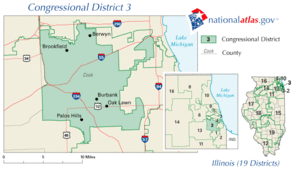 | |||||
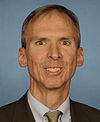 Dan Lipinski | Democratic | January iii, 2005 – January 3, 2021 | 109th 110th 111th 112th 113th 114th 115th 116th | Elected in 2004. Re-elected in 2006. Re-elected in 2008. Re-elected in 2010. Re-elected in 2012. Re-elected in 2014. Re-elected in 2016. Re-elected in 2018. Lost renomination. | |
2013–nowadays 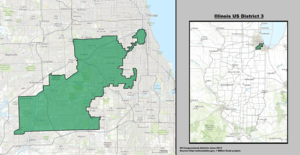 For a more detailed map, run into the Census Bureau map linked below. | |||||
 Marie Newman | Autonomous | January 3, 2021 – Present | 117th | Elected in 2020. | |
See besides [edit]
- Illinois'due south congressional districts
- List of United States congressional districts
References [edit]
- ^ "My Congressional District".
- ^ "Partisan Voting Index – Districts of the 115th Congress" (PDF). The Melt Political Report. April 7, 2017. Retrieved April 7, 2017.
- ^ Barone, Michael; McCutcheon, Chuck (2013). The Almanac of American Politics 2014. Chicago: Academy of Chicago Press. p. 558. ISBN978-0-226-10544-4. Copyright National Periodical.
- ^ a b Parsons, Stanley B.; William W. Beach; Dan Hermann (1978). United States Congressional Districts 1788-1841. Westport, CT: Greenwood Press. pp. 302–304. ISBN0-8371-9828-3.
- ^ a b Parsons, Stanley B.; William W. Beach; Michael J. Dubin (1986). United States Congressional Districts and Information, 1843-1883. Westport, CT: Greenwood Printing. pp. 7–8. ISBN0-313-22045-Ten.
- ^ a b Parsons, et al. (1986), pp. 53-54.
- ^ a b Parsons, et al. (1986), pp. 102-103.
- ^ Illinois Congressional District 3, Illinois Board of Elections
- ^ a b c Tarr, David R., ed. (2003). Congressional Districts in the 2000s: A Portrait of America. Washington, D.C.: CQ Press. p. 301. ISBN1-56802-849-0.
- ^ a b c d e Barone, Michael; Richard E. Cohen; Charles East. Melt Jr (2001). The Annual of American Politics 2002. Washington, D.C.: National Journal Group. pp. 511–513. ISBN0-89234-099-one.
- ^ a b Based on district indigenous demographics in Congressional Districts in the 2000s: A Portrait of America.
- ^ a b Barone, Michael; Grant Ujifusa; Richard E. Cohen (1997). The Almanac of American Politics 1998. Washington, D.C.: National Journal Group. p. 480. ISBN0-89234-081-9.
- ^ "Ronald McDonald House near Promise Children'due south Hospital". Ronald McDonald Firm Charities of Chicagoland and Northwest Indiana. Archived from the original on April ten, 2008. Retrieved May 24, 2008.
- ^ [1] [ expressionless link ]
- ^ [two] [ dead link ]
- ^ "TRAINS Magazine - Inside Willow Springs".
- ^ "ACH Food Companies, Inc". May 27, 2008. Archived from the original on May 27, 2008.
- ^ [3] Archived March 3, 2007, at the Wayback Machine
- ^ a b Barone, Michael; Richard E. Cohen (2005). The Almanac of American Politics 2006. Washington, D.C.: National Journal Group. p. 567. ISBN0-89234-111-4.
- ^ Guide to U.Southward. Elections (5th ed.). Washington, D.C.: CQ Press. 2005. p. 1217. ISBN1-56802-981-0.
- ^ Guide to U.S. Elections, p. 1227.
- ^ Congressional Districts in the 2000s: A Portrait of America, p. 300.
- ^ Based on results from 1976 through 2004 in the Guide to U.Southward. Elections.
- ^ Barone, Michael; Grant Ujifusa (1993). The Almanac of American Politics 1994. Washington, D.C.: National Journal Grouping. p. 395. ISBN0-89234-057-6.
- ^ a b Barone, Michael; Richard E. Cohen (2003). The Almanac of American Politics 2004. Washington, D.C.: National Periodical Group. p. 542. ISBN0-89234-105-10.
- ^ a b c d Nutting, Brian; H. Amy Stern, eds. (2002). Congressional Quarterly's Politics in America 2002. Washington, D.C.: Congressional Quarterly. pp. 312–313. ISBN1-56802-655-2.
- ^ a b c Sharp, J. Michael (2006). Directory of Congressional Voting Scores and Interest Group Ratings. Washington, D.C.: CQ Press. p. 941. ISBN1-56802-970-five.
- ^ a b c Barone, et al. (2001), p. 512.
- ^ a b "William Lipinski on VoteMatch". Archived from the original on September 28, 2007. Retrieved March 27, 2007.
- ^ Based on results from 1832 through 2002 in the Guide to U.S. Elections.
- ^ Barone, et al. (2005), pp. 567-568.
- ^ a b Illinois Land Board of Elections (March 20, 2012). "General Primary Official Vote Totals Book" (PDF). Downloadable Vote Totals. Illinois Land Board of Elections. Archived (PDF) from the original on September 12, 2021.
- ^ Illinois Country Board of Elections (Nov 6, 2012). "Official Vote Full general Election" (PDF). Downloadable Vote Totals. Illinois State Board of Elections. Archived (PDF) from the original on September 12, 2021.
- ^ a b "Vote Total Search Ballot Results".
- ^ O'Connell, Patrick One thousand. "Businesswoman Marie Newman's victory in Democratic primary ends decades of Lipinski reign". Chicago Tribune. pp. March 18, 2020. Retrieved March 19, 2020.
- ^ Illinois State Board of Elections (November 3, 2020). "Official Canvas General Ballot" (PDF). Downloadable Vote Totals. Illinois State Board of Elections. Archived (PDF) from the original on September ten, 2021.
- ^ a b c d e Vote totals from 1852 to 1868 are based on cumulative canton totals as listed in Illinois: Historical and Statistical (1892), John Moses, Chicago: Fergus Press Co., pp. 1208-1209.
- ^ a b Congressional District Data Book: Districts of the 87th Congress. Washington, D.C.: U.South. Bureau of the Census. 1961. p. 17.
- ^ Barone, Michael; Grant Ujifusa; Douglas Matthews (1972). The Almanac of American Politics. Boston: Gambit. p. 199. ISBN0-87645-053-2.
- ^ Barone, Michael; Grant Ujifusa; Douglas Matthews (1973). The Almanac of American Politics. Boston: Gambit. p. 267. ISBN0-87645-077-Ten.
- ^ Barone, Michael; Grant Ujifusa; Douglas Matthews (1977). The Almanac of American Politics 1978. New York City: Due east. P. Dutton. p. 228. ISBN0-87690-255-7.
- ^ Barone, Michael; Grant Ujifusa (1981). The Annual of American Politics 1982. Washington, D.C.: Barone & Co. p. 299. ISBN0-940702-00-two.
- ^ Barone, Michael; Grant Ujifusa (1985). The Almanac of American Politics 1986. Washington, D.C.: National Periodical Group. p. 398. ISBN0-89234-032-0.
- ^ Barone, Michael; Grant Ujifusa (1989). The Almanac of American Politics 1990. Washington, D.C.: National Periodical Group. p. 355. ISBN0-89234-043-6.
- ^ Barone, et al. (1993) p. 394.
- ^ Barone, et al. (2005) p. 566.
- ^ a b c Nir, David (November 19, 2012). "Daily Kos Elections' presidential results by congressional district for 2016, 2012, and 2008". Daily Kos.
- ^ Parsons, et al. (1986), pp. 159-160.
- ^ Parsons, Stanley B.; Michael J. Dubin; Karen Toombs Parsons (1990). Usa Congressional Districts, 1883-1913. Westport, CT: Greenwood Press. pp. 23–27. ISBN0-313-26482-1.
- ^ Parsons, et al. (1990), pp. 182-186.
- ^ Parsons, et al. (1990), pp. 187-191.
- ^ Guide to U.S. Elections, p. 1005.
- ^ Parsons, et al. (1990), pp. 326-330.
- ^ Barrett, Edward A. (ed.). Bluish Book of the State of Illinois, 1947-1948. Springfield, IL: Country of Illinois. p. 110.
- ^ Barrett, pp. 113-114.
- ^ Congressional District Atlas of the United States. Washington, D.C.: U.South. Agency of the Census. 1960. pp. 18–20.
- ^ Congressional Commune Data Book: Districts of the 88th Congress. Washington, D.C.: U.Due south. Bureau of the Census. 1963. pp. 125–127.
- ^ Congressional District Data Volume, Illinois supplement. Washington, D.C.: U.South. Bureau of the Census. 1966. pp. 2–4.
- ^ Congressional District Data Book: 93rd Congress. Washington, D.C.: U.Due south. Bureau of the Census. 1973. pp. 145, 147–148.
- ^ Gottron, Martha Five., ed. (1983). Congressional Districts in the 1980s. Washington, D.C.: Congressional Quarterly. p. 163. ISBN0-87187-264-1.
- ^ Congressional Commune Atlas: 103rd Congress of the The states. Washington, D.C.: U.S. Bureau of the Census. 1993. pp. Illinois-1, five, 22–26, 28–29, 31–32, 34. ISBN0-sixteen-041689-2.
External links [edit]
- Washington Post page on the 3rd Commune of Illinois
- "Statistical Abstract of the U.s.a.: 2003" (PDF). (163 KB) - Congressional Commune Profiles, U.S. Census Bureau
- "U.S. Census Bureau - 3rd District map" (PDF). (1.26 MB)
- U.S. Demography Bureau - 3rd District Fact Sail
Coordinates: 41°40′44″N 87°53′31″W / 41.67889°N 87.89194°West / 41.67889; -87.89194

How Many Voters Are Registered In The Illinois Third Congressional District?,
Source: https://en.wikipedia.org/wiki/Illinois%27s_3rd_congressional_district
Posted by: boltwitand.blogspot.com
0 Response to "How Many Voters Are Registered In The Illinois Third Congressional District?"
Post a Comment